Style
Incense Sticks: The Ancient Art of Natural Aromatherapy
Aug
There’s something magical about lighting an incense stick. That moment when the flame catches, when you blow it out gently and watch the first wisp of smoke rise. Suddenly your space transforms. The air fills with fragrance. Time seems to slow just a bit. You’ve created a moment of ritual in the midst of ordinary life.
Incense sticks are probably the most recognisable form of incense worldwide. These slender rods have been used for thousands of years across Asia and beyond. They’re simple, portable, and incredibly effective at creating atmosphere. But there’s a lot more to them than most people realise.
What Are Incense Sticks?
At their most basic, incense sticks are aromatic materials compressed around a thin bamboo core or formed into solid sticks. The traditional method involves grinding aromatic woods, resins, herbs, and spices into fine powders. These powders are then mixed with a natural binder, typically sticky rice paste or tree bark paste, and carefully rolled or pressed around the bamboo splint.
The craftsmanship involved is remarkable. Quality incense sticks are still hand-rolled in many places, with artisans developing a feel for the right consistency and thickness through years of practice. It’s not as simple as it looks. The mixture needs to be moist enough to stick but not so wet it drips. The coating needs to be even so it burns steadily. These skills have been passed down through generations.
Two Traditional Ways to Burn
In Chinese culture, there are two traditional orientations for burning incense sticks, each with its own significance. Lixiang, which literally means standing incense, refers to sticks burnt vertically. You’ll see these standing upright in temple altars, Buddhist shrines, and ancestral altars. The vertical orientation symbolises reaching upward toward the heavens, carrying prayers and offerings to the divine realm.
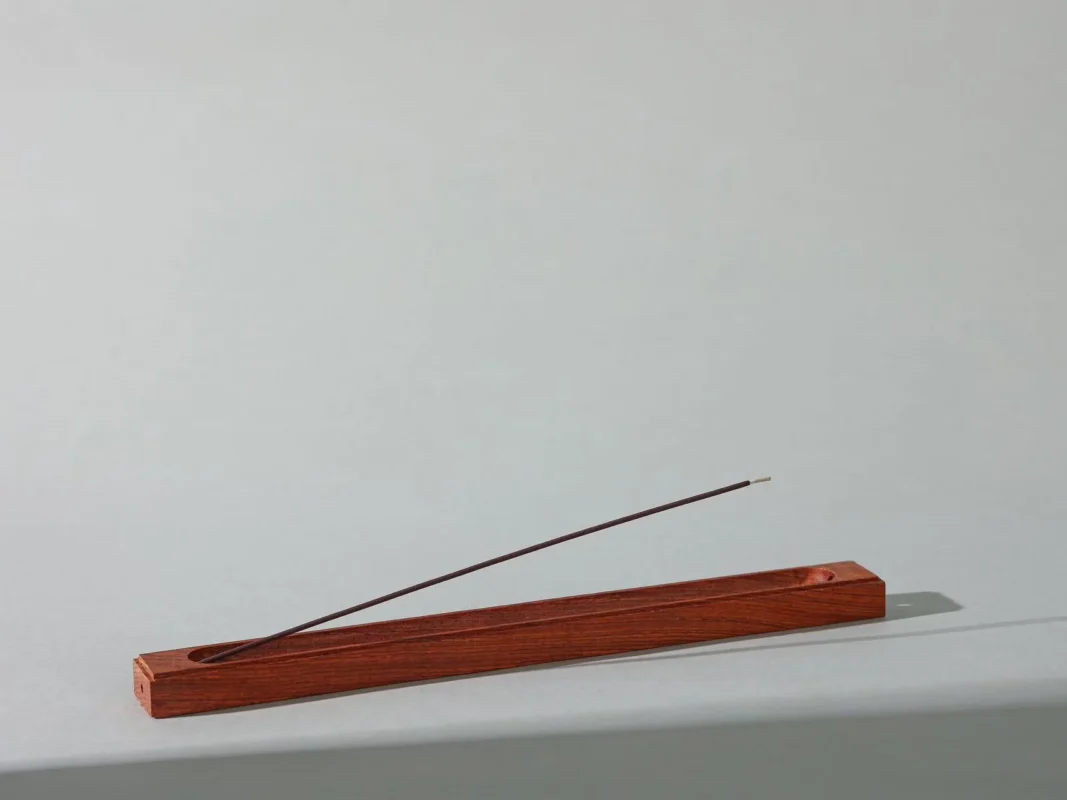
Woxiang, or reclining incense, describes sticks burnt horizontally in special holders. This method was more common for home use. The horizontal burn represents continuity and endurance. As the stick slowly burns from one end to the other, it symbolises the steady, ongoing nature of devotion and respect. Many families still burn incense this way during daily rituals.
The Heart of Chinese Celebrations
Incense sticks play a central role in Chinese cultural celebrations, particularly during Lunar New Year. Walking through any Chinese neighbourhood during this time, you’ll see and smell incense everywhere. Homes, shops, and temples all fill with fragrant smoke as people welcome the new year.
The practice serves multiple purposes. Burning incense honours ancestors, inviting their blessings for the year ahead. It purifies spaces, clearing away old energy and making room for fresh beginnings. It invites prosperity and good fortune. The number of sticks burnt often carries meaning too. Three sticks represent heaven, earth, and humanity. Nine sticks symbolise completeness and longevity.
Beyond Tradition: Modern Uses
Whilst incense sticks remain important in traditional ceremonies, they’ve found new purposes in contemporary life. Many people burn incense for meditation and yoga practice. The fragrance helps create a sacred atmosphere that supports inner work. The steady burn can even serve as a gentle timer, with practitioners choosing sticks that burn for their desired practice length.
Others use incense sticks simply to make their homes more pleasant. After a long day, lighting incense transforms ordinary space into sanctuary. Different fragrances suit different moods and times of day. Energising scents like citrus or peppermint for morning. Grounding sandalwood or agarwood for focus during work. Calming lavender for evening wind-down.
Incense has also become popular in wellness spaces. Yoga studios, meditation centres, massage therapists, and counsellors often burn incense to create calming environments. The right fragrance puts people at ease and signals that this is a space for rest and healing.
Choosing Quality Incense
Not all incense sticks are created equal. Quality varies enormously, and unfortunately, much of what’s available commercially contains synthetic fragrances and chemical additives. These cheap sticks might smell okay initially, but they often produce harsh smoke that can irritate throats and cause headaches.
Natural incense sticks made from real botanicals smell different. The fragrance has depth and complexity. It changes subtly as the stick burns. It doesn’t overwhelm or cause discomfort. Your nose can usually tell the difference. If an unburnt stick smells chemical or artificial, it probably is.
Look for incense that lists actual ingredients rather than just fragrance names. Terms like “sandalwood powder,” “agarwood,” “natural resins,” and “herbal blend” are good signs. Be wary of bright, unnatural colours. Quality incense tends toward earth tones because that’s the natural colour of ground botanicals.
Using Incense Mindfully
Burning incense sticks is straightforward, but a few tips enhance the experience. Always use a proper holder designed to catch ash safely. Make sure it’s on a stable, heat-resistant surface away from flammable materials. Never leave burning incense unattended.
Light the tip and let it flame for about ten seconds before gently blowing it out. You want a glowing ember, not an active flame. The smoke should be thin and steady. If it goes out, simply relight it.
Think about ventilation too. Whilst quality incense produces minimal smoke, you still want some air circulation. A slightly open window allows the fragrance to diffuse nicely without the space becoming stuffy.
Creating Your Own Practice
The beauty of incense sticks is how easily they fit into daily life. You might establish a morning ritual, lighting incense whilst you have your tea or coffee. This small act of intentionality sets a mindful tone for the entire day.
Or perhaps evening incense becomes part of your wind-down routine. The ritual of lighting the stick and watching the smoke signals to your brain that the busy day is done. It’s time to rest now.
Some people burn incense before activities that require focus or creativity. The familiar fragrance becomes associated with that particular state of mind, making it easier to drop into flow.
There’s no right way to incorporate incense into your life. The practice is personal. Experiment with different fragrances and times of day. Notice what feels good. Let your own ritual develop naturally over time.
Whether you’re drawn to incense sticks for their cultural significance, their practical benefits, or simply because you enjoy beautiful fragrances, you’re connecting with a practice that spans thousands of years. Every time you light that stick and watch the smoke rise, you’re participating in one of humanity’s oldest rituals for creating sacred space and inviting presence into daily life.
