Style
Raw Incense Materials
Dec
There’s something magical about raw incense materials. When you hold a piece of agarwood or sandalwood in your hand, you’re not just touching wood. You’re holding centuries of tradition, natural processes that took decades to create, and the essence of ancient forests.
Raw incense materials are the purest form of aromatic botanicals you can find. Unlike processed incense sticks or cones, these are nature’s aromatics in their most authentic state. Think of them as the difference between fresh herbs from your garden and dried spices from a jar. Both have their place, but there’s something special about working with the raw ingredients themselves.
What Are Raw Incense Materials?
When we talk about raw incense materials, we’re talking about aromatic substances that have been minimally processed. These are woods, resins, herbs, and spices that have been carefully harvested, cleaned, and dried, but nothing more. No grinding into powder. No mixing with binders. No shaping into sticks. Just pure, natural aromatics exactly as nature created them.
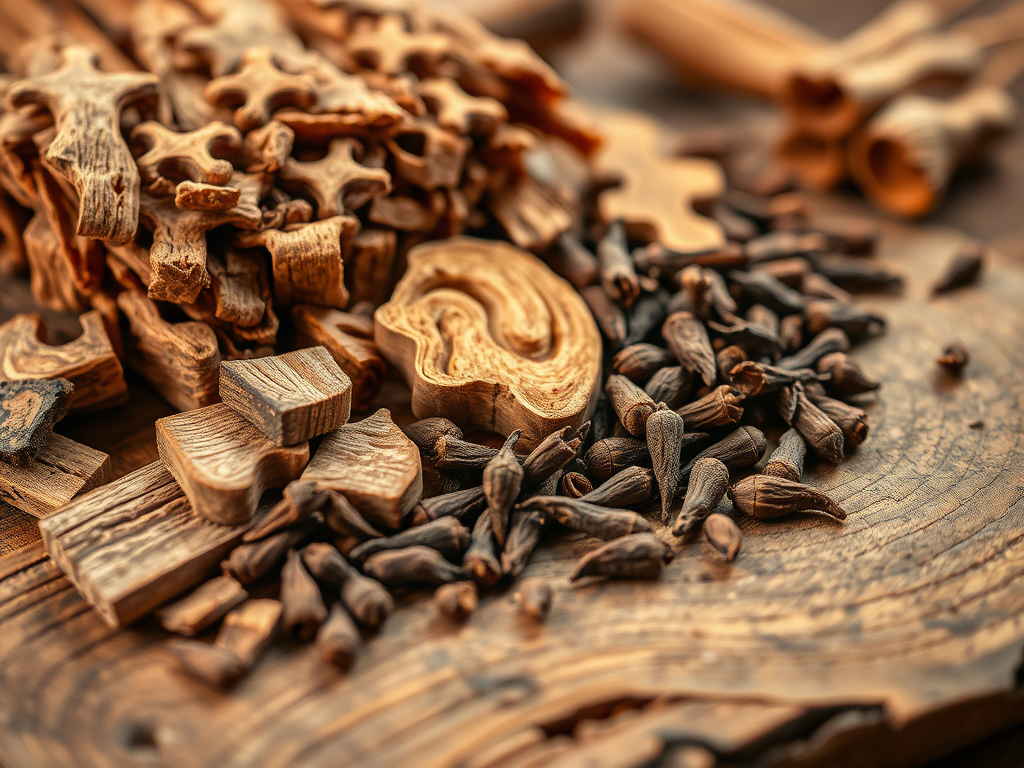
The most prized raw materials include agarwood, sandalwood, frankincense resin, myrrh, benzoin, cloves, and various aromatic woods and herbs. Each one has its own character, its own story, and its own way of releasing fragrance when heated.
A Journey Through History
The use of raw incense materials goes back further than most people realise. During the Shang Dynasty, which ruled China from around 1600 to 1046 BCE, raw aromatics played a crucial role in religious and ceremonial life. Priests would burn these materials during rituals for ancestral worship, believing the fragrant smoke carried prayers to the heavens.
Agarwood held a particularly special place in ancient Chinese culture. They called it “wood of the gods,” and it wasn’t an exaggeration. This incredibly rare and aromatic wood was so highly valued that only emperors and the highest nobility could afford it. The scarcity made sense. Agarwood only forms when certain trees become infected with a specific type of mould. The tree responds by producing a dark, fragrant resin. This process can take decades, sometimes centuries.
Sandalwood has an equally fascinating history. Ancient Sanskrit texts mention it as early as the 5th century BCE. In India, sandalwood paste was used in religious ceremonies, whilst the wood itself was burnt as incense. The fragrance was believed to aid meditation and prayer, helping practitioners reach deeper states of consciousness.
The Art of Preparation
Preparing raw incense materials is an art form in itself. It’s not as simple as picking up a piece of wood and tossing it onto charcoal. Skilled artisans spend years learning how to work with these materials properly.
With woods like agarwood and sandalwood, the goal is to expose the most resinous parts whilst maintaining the wood’s integrity. Artisans carefully chip away at the wood, following the natural grain and highlighting the veins where the aromatic oils are most concentrated. It’s a bit like a sculptor revealing the form hidden within a block of marble. The difference is that here, they’re revealing layers of fragrance.
For resins like frankincense and myrrh, the process is different. These materials are already in a relatively usable form when harvested. The resin naturally seeps from cuts in the tree bark and hardens in the air. Artisans then sort through the hardened tears, selecting the purest pieces and removing any bark or debris.
The skill lies in knowing which pieces will produce the best fragrance. Not all resin tears are created equal. Some are more aromatic than others. Some burn cleanly whilst others produce too much smoke. Experience teaches artisans which pieces to keep and which to set aside.
How to Use Raw Materials
Using raw incense materials is quite different from lighting a stick of incense. It requires a bit more equipment and attention, but many people find the process deeply meditative.
The traditional method involves burning charcoal specifically designed for incense. These charcoal discs are lit and placed in a heat-resistant burner. Once the charcoal is glowing steadily, you place small pieces of your chosen material on top. As the material heats, it releases its fragrance into the air.
The beauty of this method is the control it gives you. You can adjust the amount of material, try different combinations, and really experience each ingredient’s unique character. Want a grounding, meditative atmosphere? Try agarwood on its own. Need something more uplifting? Add a bit of frankincense. Feeling creative? Experiment with combinations.
Another popular method, especially in Japanese incense culture, uses a ceramic censer called a koro. Instead of direct flame, the materials are heated gently using buried charcoal covered with ash. This produces a much subtler fragrance. The scent emerges slowly, filling the space with gentle waves of aroma rather than billowing clouds of smoke.
The Energetic Qualities
Beyond their beautiful fragrances, raw incense materials are valued for their energetic and therapeutic properties. Traditional Chinese Medicine views these aromatics as tools for harmonising Qi, the vital life force that flows through all living things.
Agarwood is considered warming and grounding. It’s believed to help calm the mind, ease anxiety, and support deep meditation. In TCM terms, it helps descend rebellious Qi, which might manifest as racing thoughts or restlessness.
Sandalwood has cooling properties. It’s thought to clear heat from the body and calm the spirit. Many people find its soft, creamy fragrance perfect for evening meditation or winding down before sleep.
Frankincense has been used for thousands of years to support spiritual practice. Its resinous, slightly citrusy aroma is said to elevate consciousness and deepen prayer or meditation. Modern research has actually found compounds in frankincense that may have mood-enhancing properties.
Choosing Quality Materials
Not all raw incense materials are created equal. Quality varies enormously, and unfortunately, so does the price. Here’s what to look for when choosing materials.
For agarwood, the density and resin content matter most. High-quality agarwood should feel heavy for its size and show visible dark resin throughout. When you smell it, even unburnt, you should detect a rich, complex aroma. Lower grades might smell musty or have very little scent at all.
Sandalwood should have a creamy, sweet fragrance even before burning. The colour can range from pale yellow to deep brown, depending on the variety and age. Indian sandalwood tends to be paler, whilst Australian sandalwood is often darker. Both are excellent, just different in character.
When it comes to resins like frankincense and myrrh, look for tears that are translucent or semi-translucent. They should be relatively clean, without too much bark or debris attached. The colour varies by type. Frankincense can range from pale yellow to deep amber, whilst myrrh tends towards reddish-brown.
Sustainability Matters
Here’s something important we need to talk about. Many traditional incense woods, particularly agarwood and certain species of sandalwood, are now endangered or threatened due to overharvesting. The demand has far outpaced the supply, and natural populations have suffered.
When buying raw incense materials, it’s crucial to source from reputable suppliers who can verify their materials are ethically and sustainably harvested. Look for plantation-grown sandalwood rather than wild-harvested. With agarwood, seek out suppliers who work with sustainable sources or plantation farms where the trees are specifically cultivated for incense production.
Some suppliers are also working with alternative materials that offer similar aromatic profiles without the environmental impact. It’s worth exploring these options too. The tradition of incense is ancient and beautiful, but it needs to evolve to remain sustainable for future generations.
Creating Your Own Blends
Once you become familiar with individual raw materials, you might want to try creating your own blends. This is where the practice becomes truly personal and creative.
Start simple. Try combining just two or three materials that you enjoy individually. Notice how they interact when burnt together. Does one dominate? Do they harmonise? Does the combination create something entirely new?
Traditional Chinese incense blending often follows the principle of the Five Elements: wood, fire, earth, metal, and water. Each aromatic material is associated with one or more elements, and blends are created to achieve balance or emphasise particular qualities.
You don’t need to follow these traditional frameworks, though. Trust your nose and your intuition. If a combination smells good to you and serves your purpose, whether that’s meditation, relaxation, or simply enjoying beautiful fragrances, then you’ve created a successful blend.
The Modern Revival
There’s been a real revival of interest in raw incense materials over the past few years. People are increasingly drawn to natural, authentic experiences. They want to understand where things come from and how they’re made. Raw incense materials offer exactly that kind of authentic connection.
Using raw materials also slows us down. You can’t just light it and walk away like you might with a stick of incense. You need to prepare the charcoal, select your materials, place them carefully. The process itself becomes a ritual, a moment of mindfulness in our busy lives.
Many people find that working with raw materials deepens their appreciation of incense as an art form. When you experience each ingredient individually, you start to notice subtle differences. You develop preferences. You understand why certain traditional blends are composed the way they are.
Bringing Ancient Wisdom Home
Working with raw incense materials connects us to thousands of years of human tradition. When you burn a piece of agarwood or frankincense, you’re doing exactly what people have done for millennia. The emperors of ancient China, the priests of ancient temples, the monks in their mountain monasteries, they all experienced these same fragrances.
Yet the practice remains completely relevant today. In our modern world of synthetic fragrances and artificial scents, raw aromatics offer something genuine. They remind us of our connection to nature. They create space for contemplation and reflection. They transform ordinary moments into something sacred.
Whether you’re drawn to the meditative aspects, the beautiful fragrances, or simply the pleasure of working with natural materials, raw incense offers a rich and rewarding practice. It’s an invitation to slow down, pay attention, and engage with one of humanity’s oldest arts.
Start with one or two materials that call to you. Experiment. Be curious. Notice what you experience. There’s no right or wrong way to appreciate these ancient aromatics. The practice is personal, and your journey with raw incense materials will be uniquely your own.
